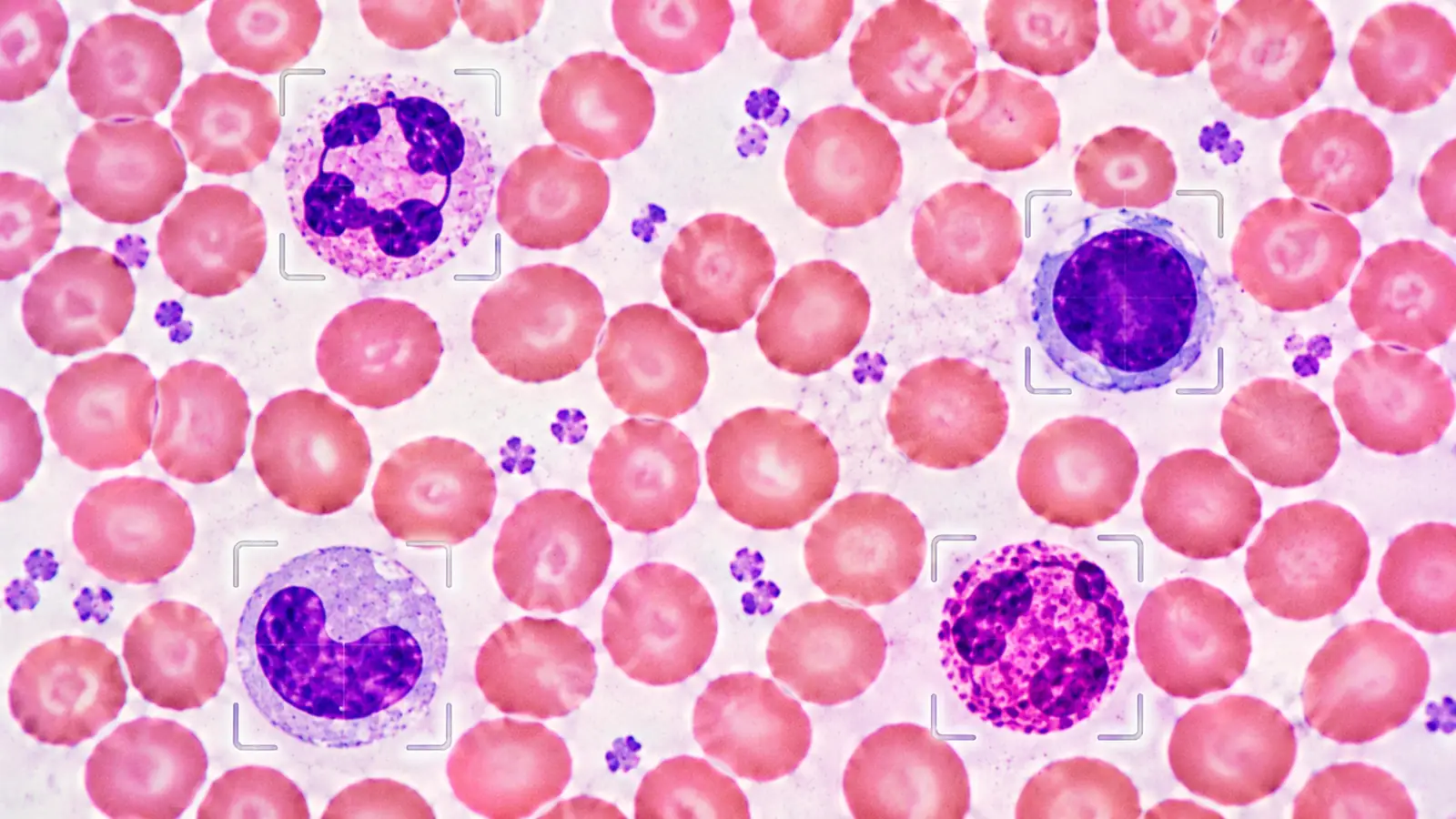
Digital microscopy and artificial intelligence (AI) are changing how laboratories examine blood smears. Digital morphology analysers capture microscopic images and use automated systems to detect, pre-classify and assess blood cells. The quality of these images is essential because AI systems rely on visible cellular features to perform their analysis.
High-purity Romanowsky stains can help laboratories maintain consistent staining when their composition and use are properly controlled. Variations in staining may change cellular colour, contrast and visibility, potentially affecting automated image interpretation. However, stain purity alone does not guarantee AI accuracy. Specimen preparation, scanning conditions and model validation also matter.
Understanding High-Purity Romanowsky Stains
Romanowsky stains are commonly used to examine blood cells and distinguish their morphological features. Common methods include Wright, Wright-Giemsa, Giemsa, and May-Grünwald-Giemsa staining.
These methods combine acidic dyes, such as eosin Y, with basic dyes derived from methylene blue, including azure compounds. Azure B contributes to the characteristic purple staining associated with Romanowsky methods, while eosin contributes pink to orange-red staining.
Chemical purity and formulation consistency matter because dye composition influences staining behaviour. A 1980 study by Bentley, Marshall and Trobaugh discussed the need for standardised Romanowsky stain composition and controlled specimen preparation for consistent results and valid digital blood-cell image processing.
How Romanowsky Stains Support AI Image Recognition
Romanowsky staining provides colour differentiation that helps distinguish red blood cells, white blood cells and platelets under a microscope. It also helps reveal cellular features such as nuclear structure, cytoplasm and granules.
AI-based image analysis uses combinations of visual characteristics, including colour, shape, texture and cellular boundaries, to detect and classify cells. Consistent staining can help maintain the appearance of these features across specimens.
A 1980 microspectrophotometric study examined the absorption characteristics of Romanowsky-stained blood cells and identified wavelengths relevant to automated image processing. This provides historical evidence of the relationship between Romanowsky staining chemistry and computational blood-cell analysis.
Modern AI systems are more complex, so consistent staining should be considered one contributing factor rather than a guarantee of correct classification.
Key Benefits for Modern AI Image Scanning
Image clarity – Appropriate staining helps reveal cellular structures and morphological details needed for microscopic examination. The actual image quality also depends on specimen preparation and scanning.
Consistent colour representation – Controlled dye composition and staining procedures can reduce avoidable differences in cellular appearance between batches. This helps laboratories compare digital images more consistently.
Cell classification – Clear and reproducible cellular features can support AI systems that detect and pre-classify blood cells. However, improved classification accuracy must be demonstrated through testing rather than assumed from stain purity alone.
Quality control – Reference slides and established acceptance criteria can help laboratories identify staining problems before images enter automated analysis. This reduces the risk of processing visibly unsuitable specimens without review.
Workflow efficiency – Digital morphology analysers can support faster cell review and help prioritise images or cells requiring professional assessment. These benefits depend on the analyser, specimen quality and laboratory workflow, not on stain purity alone.
A 2025 review of digital morphology analysers confirms that these systems can improve laboratory workflows, while noting that poor-quality blood films and staining can contribute to errors.
Challenges That Can Affect AI Scanning Accuracy
High-quality staining reagents cannot eliminate every source of image variation. Buffer pH, staining duration, dye formulation, fixation, washing and drying can all influence the final appearance of a blood film.
Staining artefacts and poorly prepared smears may obscure cellular structures. Similarly, microscope illumination, focus, scanner calibration and image processing can change the recorded image.
Differences between laboratories may also affect AI performance when a model encounters staining conditions or image characteristics that were not adequately represented in its training data.
Consequently, high-purity Romanowsky stains should be used alongside controlled preparation procedures, consistent imaging conditions and appropriate AI validation. The direct improvement in AI accuracy attributable specifically to increased dye purity has not been quantified by the cited studies.
Best Practices for Laboratories Using AI-Assisted Scanning
Laboratories can improve consistency through practical quality-control measures:
- Use validated reagents – Establish appropriate specifications for dye identity, purity, composition and acceptable impurities.
- Standardise staining procedures – Maintain controlled staining times, buffer pH, fixation, washing and drying conditions.
- Monitor reagent batches – Compare new batches with suitable reference specimens and documented acceptance criteria.
- Check slide quality – Inspect blood-film preparation, staining characteristics, focus and image artefacts before automated analysis.
- Maintain scanner consistency – Use appropriate imaging settings and colour-management procedures.
- Validate AI performance – Evaluate systems using representative specimens, staining conditions and scanners. Reassess performance when important workflow changes occur.
These practices help laboratories control different sources of variation and assess the complete staining-to-analysis process.
Conclusion: Building a Strong Foundation for AI-Driven Haematology
High-purity Romanowsky stains support controlled reagent composition and consistent blood-cell staining, both relevant to digital microscopy. Their value is greatest when combined with standardised specimen preparation, reliable scanning and validated AI systems. Although consistent staining can help reduce avoidable image variation, it cannot guarantee accurate automated classification. AI-assisted findings, particularly abnormal or uncertain cell classifications, require appropriate professional review.
Frequently Asked Questions
1. What are Romanowsky stains used for?
They are used to stain blood cells and reveal morphological features under a microscope.
2. Why does stain purity matter for AI image scanning?
Controlled dye composition can help maintain consistent cellular staining and image characteristics.
3. Can staining variation affect AI classification?
Yes. Changes in colour, contrast and cellular detail may affect automated cell detection and classification.
4. Do high-purity stains guarantee accurate AI results?
No. Accuracy also depends on specimen preparation, scanning conditions, training data, and validation.
5. How can laboratories maintain staining consistency?
By controlling reagent quality, standardising staining protocols, checking batches, and validating the complete imaging workflow.