
In precision science, colour is chemistry. When a laboratory tests groundwater hardness using Eriochrome Black T, when a pharmaceutical QC team validates buffer pH with Bromocresol Green, or when a research institution calibrates an assay with Bromothymol Blue, every result depends on one unspoken assumption: that this batch of indicator performs exactly like the last one. That assumption is only valid if the manufacturer behind the reagent has made consistency a foundational engineering commitment, not an afterthought.
At GSP Chem (Esjay Chemicals), we have spent over four decades manufacturing pH indicators and life science reagents from our ISO 9001:2015 certified facility in Tarapur, Maharashtra. In that time, we have shipped to customers across the globe where a reagent that drifts even marginally between lots can cascade into retested batches, failed method validations, and eroded supplier trust. This article explains exactly how we prevent that from happening.
The GSP Chem Quality Architecture: Eight Pillars of Consistency
1. Raw Material Qualification
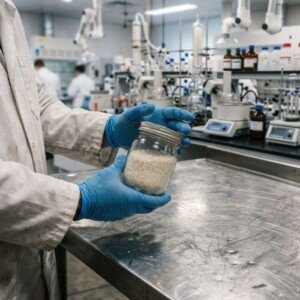
Every consistent final product starts with a controlled input. At GSP Chem, all raw materials, whether sulfonated aromatic precursors for Bromocresol Green synthesis or sodium salts used in Bromothymol Blue production, undergo rigorous incoming inspection against documented specifications. Suppliers are pre-qualified and periodically re-evaluated. Any new raw material source triggers a parallel test batch before being released into production, ensuring that upstream variation is caught at the gate, not discovered at the final product stage.
2. Controlled Synthesis Processes

Synthesis of pH indicators involves precise sulfonation, bromination, or azo-coupling reactions where temperature, addition rate, reaction time, and pH of the reaction mixture are all critical process parameters. A deviation of even 0.5°C during the bromination step in Bromocresol Green synthesis can shift the degree of substitution, altering the indicator’s pKa and producing a lot that technically passes visual inspection but fails in analytical performance.
3. In-Process Quality Checks

We do not wait until the end of synthesis to assess a batch. Intermediate samples are pulled at defined reaction stages, typically after the primary reaction, after workup, and before drying, and tested for pH of the reaction mixture, yield at intermediate stages, and intermediate purity by spectrophotometric check.
4. Colour Transition Consistency
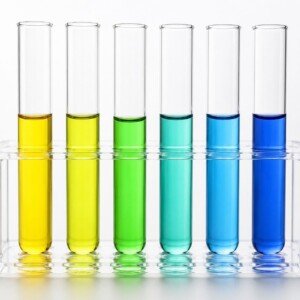
The functional test of a pH indicator is its colour transition, the pH range over which it changes colour, the sharpness of that transition, and the visual distinctiveness of the end-colour states. For each product, we maintain internal reference standards prepared from certified benchmark lots. Every production batch is tested against this reference for transition pH, colour at defined pH points, and transition sharpness.
5. Purity Validation

Our purity validation programme includes UV-Vis spectrophotometry at defined wavelengths, loss on drying (LOD) measurement, and ash content determination. All results are documented in the Certificate of Analysis (CoA) that accompanies every shipment.
6. Standardised Manufacturing Protocols

At GSP Chem, all synthesis and quality testing procedures are documented as Standard Operating Procedures (SOPs) under our ISO 9001:2015 Quality Management System. SOPs are version-controlled, regularly reviewed, and operators are qualified against them before running production batches independently. This standardisation is the reason a customer in the USA can receive our Bromothymol Blue in January and again in October and find identical performance on their instrument because the process that made both lots was controlled by the same documented protocol.
7. Batch Traceability
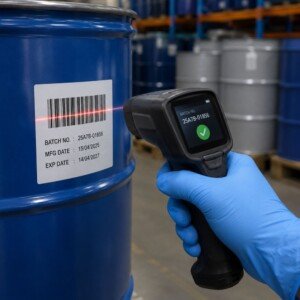
Our batch numbering system ensures full forward and backward traceability from raw material to the final shipped container. Every batch record captures raw material lot numbers and supplier certificates, synthesis parameters and deviations (if any), in-process test results, final quality test data, and packing and dispatch details including customer reference.
8. Final Quality Testing and Release

No batch leaves our facility without passing the full final quality test panel. The release test for pH indicators includes appearance and colour, solubility test, pH transition verification, spectrophotometric assay (dye content and purity), loss on drying, and identification test. The QC head reviews and approves the CoA before dispatch authorisation is issued. Pre-shipment samples are routinely offered to customers for independent verification before the commercial shipment is released, a practice that has, over decades, reduced post-shipment quality disputes to near zero.
Conclusion
Batch-to-batch consistency in pH indicator manufacturing is not achieved by accident. It is the product of a disciplined, documented, and continuously monitored quality system applied at every step from raw material intake to final dispatch. At GSP Chem, that system has been refined over more than 40 years and is now formally anchored by ISO 9001:2015 certification and government-recognised export standards.
For laboratory buyers, distributors, research institutions, pharmaceutical companies, and industrial testing organisations worldwide, this means one thing: when you qualify a GSP Chem pH indicator lot, you are qualifying a system, and that system will deliver the same quality lot after lot, year after year.
To request a free pre-shipment sample, a Certificate of Analysis, or a technical data sheet for any of our pH indicators or life science reagents, contact our team at sales@gspchem.com.