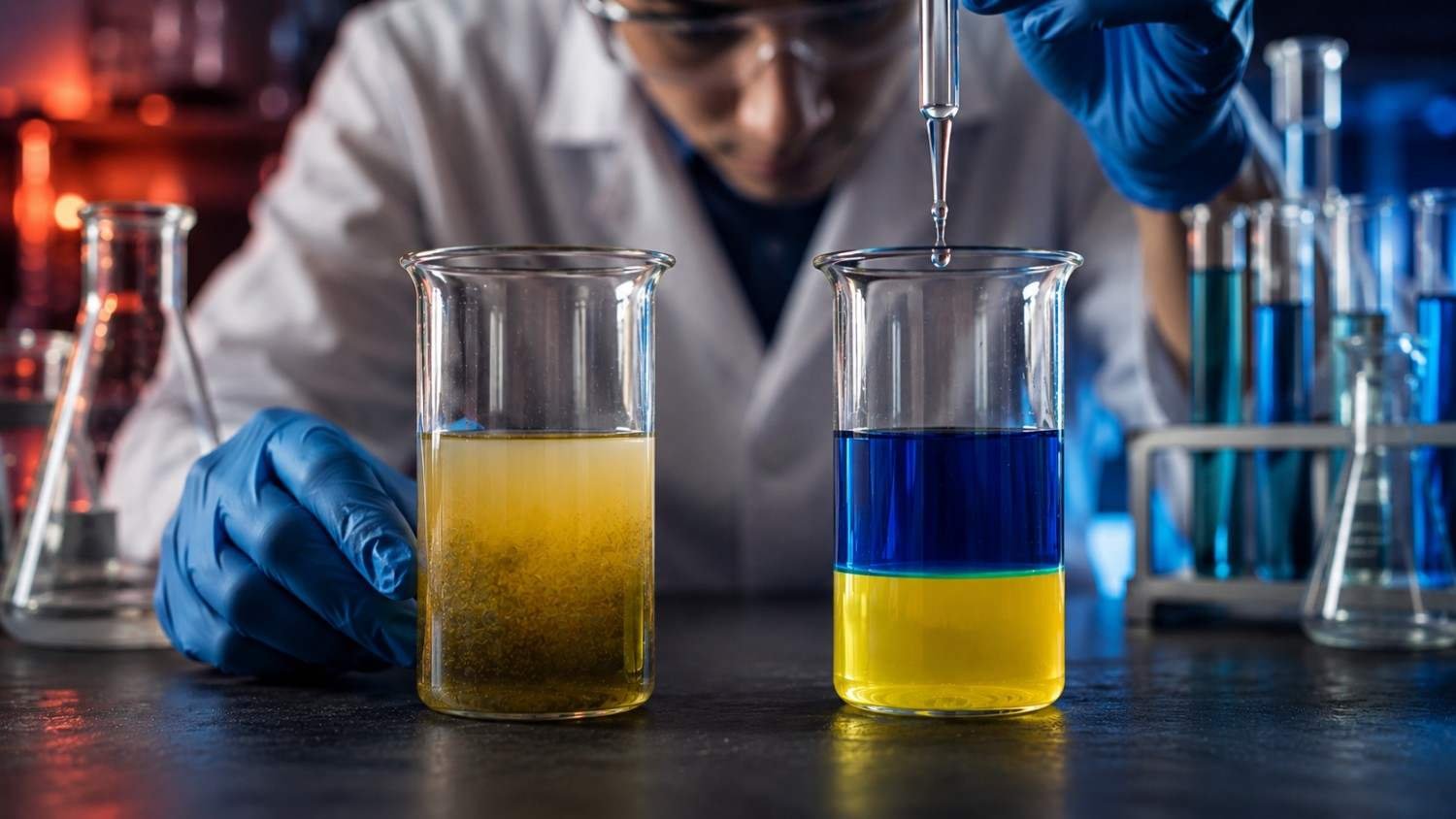
The purchase order line item reads simply: Bromocresol Green, 100g, and next to it a price that is 30% lower than the incumbent supplier. To a procurement manager under margin pressure, it looks like a straightforward saving. Twelve weeks later, a QC technician flags inconsistent endpoint colours during a buffer pH validation run. The batch is quarantined. The investigation that follows- root cause analysis, retest labour, replacement sourcing, and customer communication- costs more than the annual saving on that one reagent. This scenario is not an edge case. It is a recurring pattern in laboratories and industrial facilities that have optimised for unit price without accounting for the true cost of analytical reagent quality.
This article is written for laboratory managers, QC directors, and industrial procurement teams who evaluate pH indicator suppliers. It explains, with specificity, where the hidden costs of low-grade pH indicators accumulate, and what to look for in a supplier whose quality systems are engineered to prevent them.
Where the Real Cost of Low-Quality pH Indicators Appears
1. Analytical Errors, Retesting, and Investigation Costs
The primary purpose of a pH indicator is to deliver a reliable and reproducible response at a defined pH range. When indicator quality varies due to impurities, inconsistent dye content, or degraded transition characteristics, analytical accuracy suffers. For example, laboratories using Bromocresol Green in albumin determination rely on precise absorbance values. A low-purity lot can alter this response and introduce systematic errors across an entire analytical run.
2. Product Quality Risks and Batch Losses
In pharmaceutical manufacturing, food testing, clinical diagnostics, and other quality-critical industries, pH indicators are often used to support product release decisions. When an indicator delivers inaccurate results, incorrect pass/fail decisions can occur.
A small deviation in endpoint determination may result in off-specification products being approved or compliant products being rejected. The resulting costs can include batch rejection, product recalls, customer complaints, regulatory reporting requirements, and reputational damage.
3. Increased Quality Control and Laboratory Inefficiencies
Consistent, high-purity indicators from qualified suppliers allow laboratories to operate validated methods with confidence. In contrast, inconsistent reagent quality often forces laboratories to perform additional incoming inspections, lot verification studies, and comparative performance testing before use.
4. Production Disruptions and Operational Impact
In industrial applications such as water treatment, chemical processing, paper manufacturing, and textile production, pH indicators support critical process control decisions. Ambiguous or unreliable colour transitions can delay process adjustments and slow production workflows.
More importantly, inaccurate pH measurements can contribute to off-specification production batches. The resulting losses may include wasted raw materials, additional processing costs, production downtime, and missed delivery commitments, all of which far outweigh any initial procurement savings.
5. Regulatory Compliance and Customer Confidence
Regulatory agencies and accreditation bodies expect laboratories to source critical analytical reagents from qualified suppliers with documented quality systems, traceability, and batch certification. Indicators purchased solely on price from suppliers lacking proper quality controls can create significant audit and compliance risks.
For manufacturers and distributors, poor-quality indicators can also lead to customer complaints, product returns, and loss of trust. A single inconsistent lot may damage customer relationships that have taken years to build, making reagent quality not only a technical requirement but also a business necessity.
Low-Grade vs High-Purity pH Indicators: A Direct Comparison
| Criterion | Low-Grade Indicator | High-Purity / ISO-Certified Indicator |
| Dye content | Variable; often below ACS minimum (may be 80–88%) | Tested to ACS/Merck spec; typically ≥95% with CoA confirmation |
| Transition sharpness | Broader pH range; ambiguous endpoint | Sharp, reproducible transition within a defined pH range |
| Batch-to-batch consistency | No formal QMS; lot variation unpredictable | ISO 9001:2015 controlled; batch records and in-process QC |
| Impurity profile | Partially brominated by-products; process contaminants | Validated by HPLC and spectrophotometry; impurities documented |
| Documentation | Basic CoA; no traceability; no reference alignment | Full CoA; batch traceability; ACS/Merck/Sigma reference alignment |
| Regulatory suitability | High risk in GMP, ISO 17025, or GLP environments | Suitable for validated methods; supports audit trail |
| True procurement cost | Low unit price; high total cost of ownership | Higher unit price; lowest total cost of ownership |
How ISO 9001:2015 Certification Reduces These Risks Systematically?
The risks described above are not inevitable. They are the predictable consequence of sourcing from manufacturers who lack the quality management infrastructure to prevent them. ISO 9001:2015 certification, when genuine, scope-specific, and backed by a functioning quality management system rather than a framed certificate on a wall, is the formal marker of a manufacturer that has built that infrastructure.
At GSP Chem, our ISO 9001:2015 certification (Certificate No. 138047/A/0001/UK/En, issued by URS, accredited by UKAS, and recognised under the IAF Multilateral Recognition Arrangement) covers specifically the manufacture and global supply of pH indicators and life science reagents. The scope is not generic; it is the exact product category under discussion.
Our quality system governs raw material qualification, synthesis parameter control, in-process testing, purity validation against ACS and Merck reference specifications, batch-specific Certificate of Analysis preparation, and pre-shipment sample availability. For each of the eight hidden cost categories identified in this article, there is a specific element of our QMS designed to prevent it.
Conclusion: The Price on the Purchase Order Is Not the Cost of the Reagent
A pH indicator that costs 30% less per gram and generates one OOS investigation, one failed analytical run, and one method reverification exercise in its first year of use has not saved money; it has consumed it, invisibly, across the laboratory cost base. The hidden costs of low-grade pH indicators are real, well-documented in the quality management literature, and entirely preventable through disciplined supplier qualification.
For over 40 years, GSP Chem has built its business on the proposition that the true value of a specialty chemical reagent is not its unit price; it is the consistency, reliability, and documented quality that allows the laboratories and facilities that use it to focus on their work, not on their reagents. To request a sample, CoA, or technical consultation for any of our pH indicators, contact our team at sales@gspchem.com or visit gspchem.com.